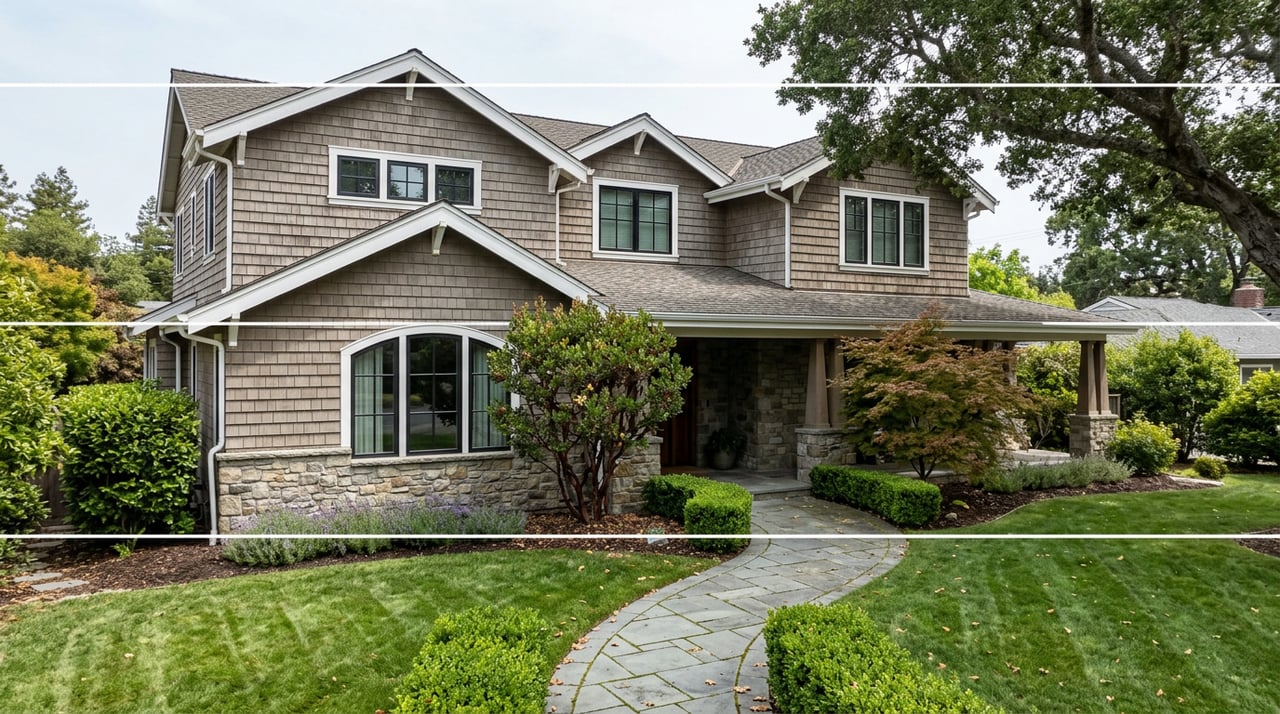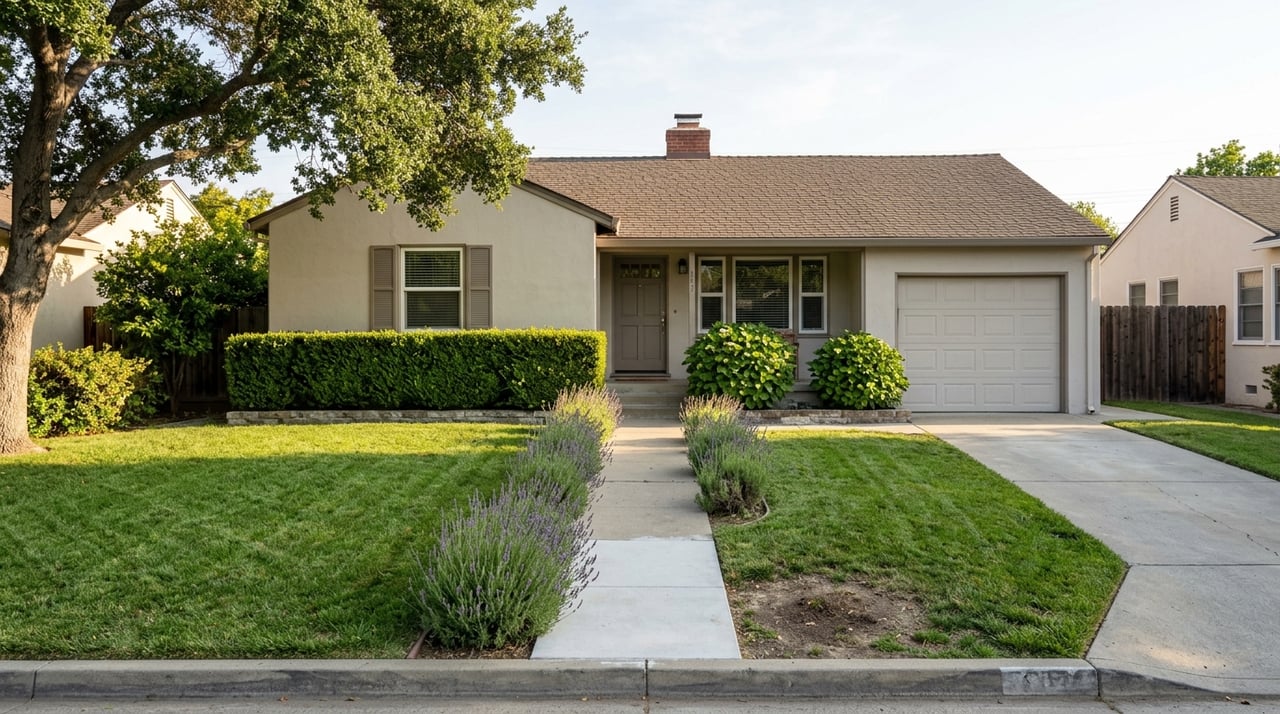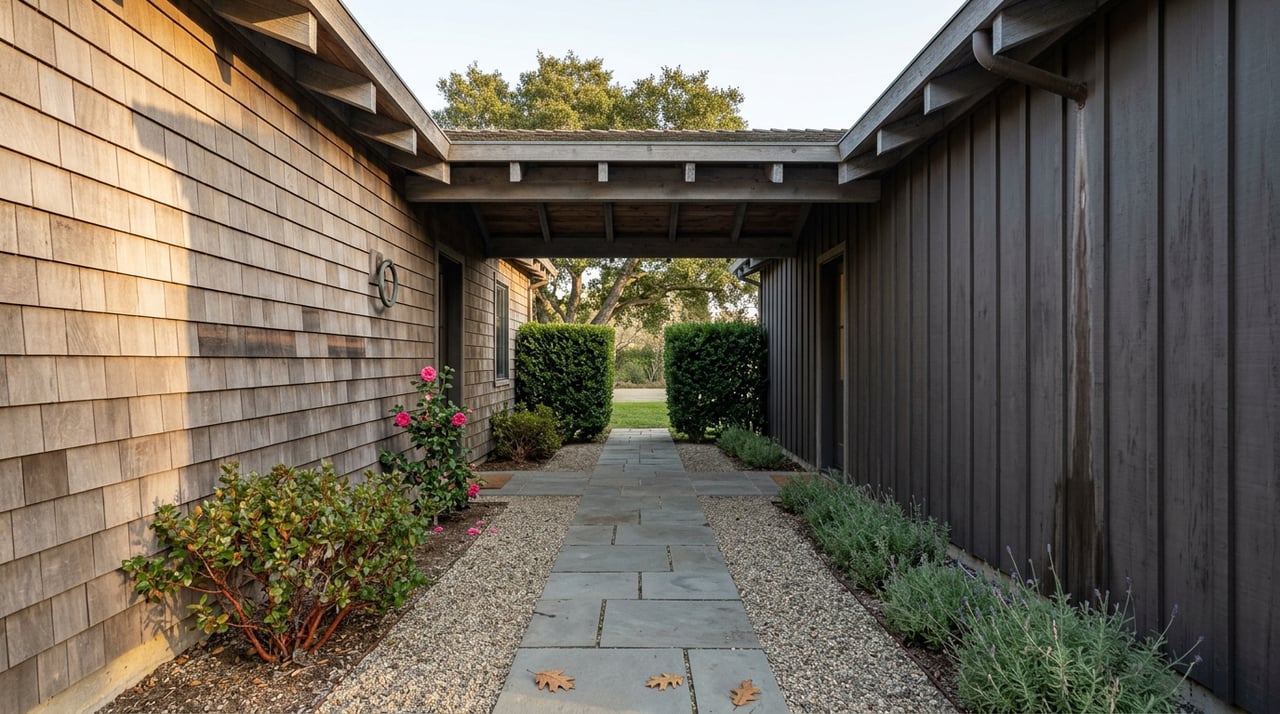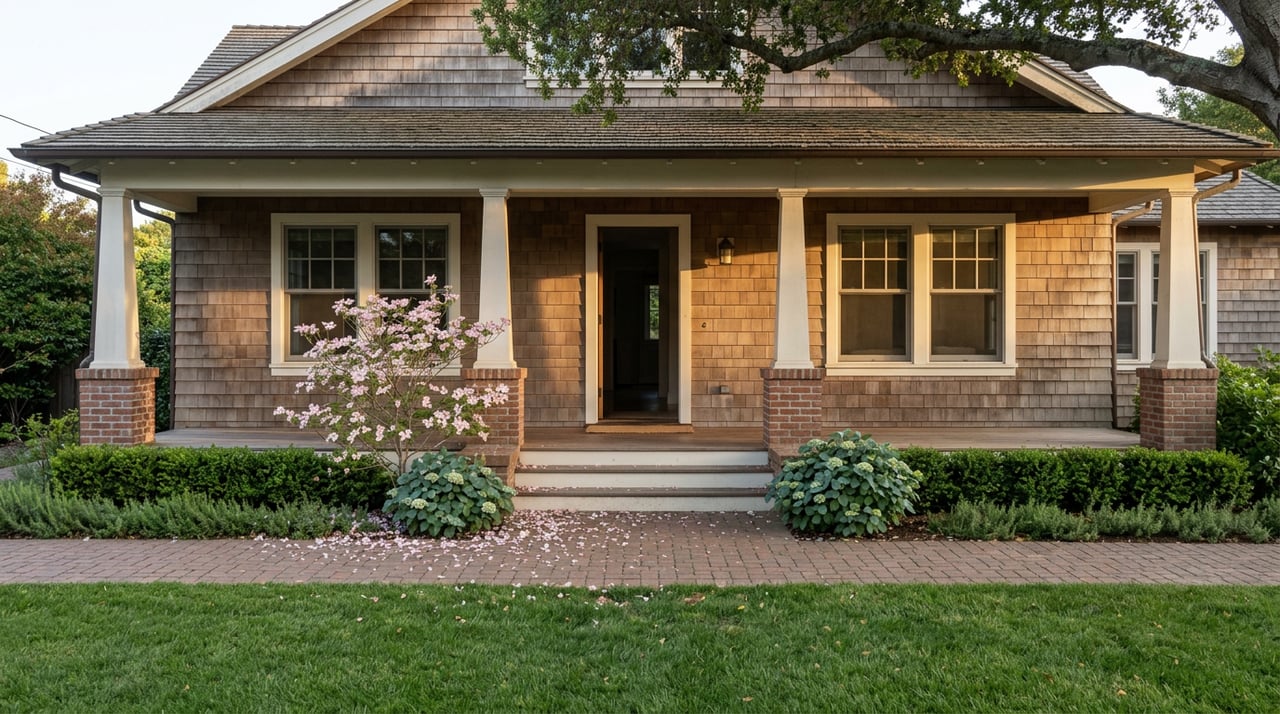
On April 23, 2026, a two-story house on McDonald Avenue in Santa Rosa changed hands for $1.6 million. It is 2,714 square feet, built in 1890, with three bedrooms, two bathrooms, a fireplace, a detached two-car garage, and a 15,000-square-foot lot. At $590 a square foot, it sold well above what a typical Santa Rosa home commands right now, where citywide figures through the summer have hovered in the $715,000 to $759,000 range for the median.
The obvious explanation is charm. A 136-year-old house on a wide lot in a walkable, tree-lined pocket of Santa Rosa is going to cost more than a tract home from the 1990s. But that explanation stops short of what actually changes hands in a sale like this. Buy a house inside one of Santa Rosa's eight historic districts, and you are not just buying square footage and a fireplace. You are buying into a permission structure that governs what you can do to the outside of your own house, and inheriting the wiring decisions someone else made a century ago. The price reflects both. So does the paperwork.
What The Premium Is Actually Buying
Look at four recent sales clustered around the same historic corridor and the pattern gets more specific than "old houses cost more."
| Address | Sold | Year Built | Size | Price | Price/Sq Ft |
|---|---|---|---|---|---|
| 1000 McDonald Avenue | April 2026 | 1890 | 2,714 sq ft | $1.6M | $590 |
| 904 St Helena Avenue | May 2025 | — | 2,211 sq ft | $1.3M | $588 |
| 721 Spring Street | March 2026 | — | 3,002 sq ft | $1.29M | $430 |
| 1016 St Helena Avenue | September 2025 | — | 1,313 sq ft | $860,000 | $655 |
Two things stand out. First, the smallest house on the list, 1016 St Helena Avenue at just 1,313 square feet, actually posted the highest price per square foot at $655. Small, well-kept, well-located historic homes are not discounted for size the way a small house in a newer subdivision would be. Second, the price-per-square-foot spread across these four sales runs from $430 to $655, a much wider band than you would expect from four houses inside a few blocks of each other. That spread is not really about finish quality. It is about how much of each house's original fabric, and how much of the permitting history behind it, a buyer is inheriting.
The Permission You Inherit
Santa Rosa recognizes 22 local historic landmarks and eight historic districts across the city, most of them concentrated in the older neighborhoods near downtown, including the corridor where these sales happened. Owning a home inside one of those districts, or owning an individually landmarked property, comes with a rule most buyers do not think to ask about until they are already past inspection: exterior changes go through a Landmark Alteration Permit, and which version of that permit you need depends on scope.
The city sorts these into three tiers:
- Director Level review, handled by city staff, for smaller changes
- Minor review, acted on by the city's Zoning Administrator
- Major review, which goes to the full Design Review and Preservation Board
Every one of these has to be found consistent with the Secretary of the Interior's Standards for Rehabilitation, the federal framework for how historic buildings get altered without losing what made them historic in the first place.
What this means in practice is that the fence a seller wants to replace before listing, the exterior paint color a new owner wants to change, or the addition a buyer is already picturing in the backyard may not be a weekend project. It may be a permit application, a review cycle, and a design conversation with the city before a single board gets nailed up.
None of that is a reason to avoid these neighborhoods. It is a reason to build the timeline into your plans before you write an offer, not after you have already scheduled the contractor.
What The Inspector Will Find
Buy a house built before 1940 almost anywhere in Santa Rosa's historic core and there is a good chance the inspection turns up knob-and-tube wiring, an electrical system with no ground wire that was never designed for the loads a modern household puts on it. Local electricians who work these neighborhoods regularly flag it specifically in Santa Rosa's historic districts, alongside the Petaluma houses along the A Street corridor that share a similar build era. Panels are the other recurring finding. Homes built before 1990 sometimes still carry Federal Pacific Stab-Lok or Zinsco panels, both with a documented history of breakers that fail to trip during an overload, which is the one job a breaker is supposed to do.
This is not a defect unique to any one address on this list. It is close to a given for a house built in 1890, or even one built in the 1930s. The useful question for a buyer is not whether an old panel or a stretch of knob-and-tube will turn up. It almost certainly will. The useful question is what it costs to address and whether that cost changes because the house sits inside a historic district.
The Break Nobody Advertises
Here is where the story flips from restriction to relief. Santa Rosa allows owners of identified historic buildings to use the California Historical Building Code instead of the standard building code when doing rehabilitation work. That alternate code gives more flexibility on how a fix gets made and, according to the city, usually results in a minimum 10 percent cost savings compared to bringing an old structure up to full modern-code compliance.
That matters directly for the knob-and-tube and outdated-panel conversation. A non-historic house from 1890 would, in a full renovation, be pushed toward matching current code in ways that can be expensive and sometimes structurally invasive. A historic-designated house gets to solve the same electrical problem under a code built for buildings like it. The same landmark status that requires a permit before you repaint your porch is the reason a full rewire does not have to be priced as if the house were being brought up to 2026 new-construction standards.
That is the real trade being made in a sale like the one on McDonald Avenue. The buyer is not just paying for square footage and character. They are paying for a house that comes with both an obligation and an offsetting advantage, and the $590 per square foot only tells half of that story.
Before You Write The Offer
A few things worth confirming before you get deep into a purchase or a listing inside one of these districts:
- Ask whether the specific address is an individually designated landmark, sits within one of the eight historic districts, or is neither. The rules differ.
- Request any documentation of prior electrical work, especially panel replacement or knob-and-tube remediation, since this is the single most common inspection flag in this housing stock.
- If you are planning any exterior work after closing, from a fence to an addition, ask the city which of the three permit tiers applies before you budget the project.
- If you are selling and want to make exterior touch-ups before listing, check whether that work needs sign-off first. A driveway repaving or a repaint can trigger review depending on visibility and material.
- Talk to a contractor who has worked under the California Historical Building Code specifically. Not every electrician or general contractor is familiar with how it changes the scope of a rewire.
Frequently Asked Questions
Do I need city approval to repaint my house if it is in a historic district? It depends on scope and visibility. Smaller changes can qualify for Director Level review handled by staff, while more visible exterior alterations may require Minor or Major review. Confirming which tier applies before starting work saves time.
Is every old house in Santa Rosa inside a historic district? No. Santa Rosa's protections apply specifically to its 22 named local landmarks and eight designated historic districts. A house can be a century old and sit entirely outside those boundaries, in which case the standard permitting process applies.
Does knob-and-tube wiring mean a house cannot get insurance or a loan? Not automatically, but it is something both an insurer and a lender will typically want addressed or at minimum documented. It is one of the most common findings a buyer negotiates around in this part of Santa Rosa's housing stock.
Does the California Historical Building Code lower my property taxes? No. It is a construction code alternative that affects how rehabilitation work is scoped and approved, not a property tax program. Any tax questions specific to a historic property are worth directing to the Sonoma County Assessor's office.
If you are looking at a house in one of Santa Rosa's historic districts, or trying to figure out what a listing near downtown is really asking you to take on, Amy Ahlers has walked enough of these transactions to know which questions to ask before you are in escrow, not after. Reach out and let's figure out what the house in front of you actually requires. Own the Home Meant for You.