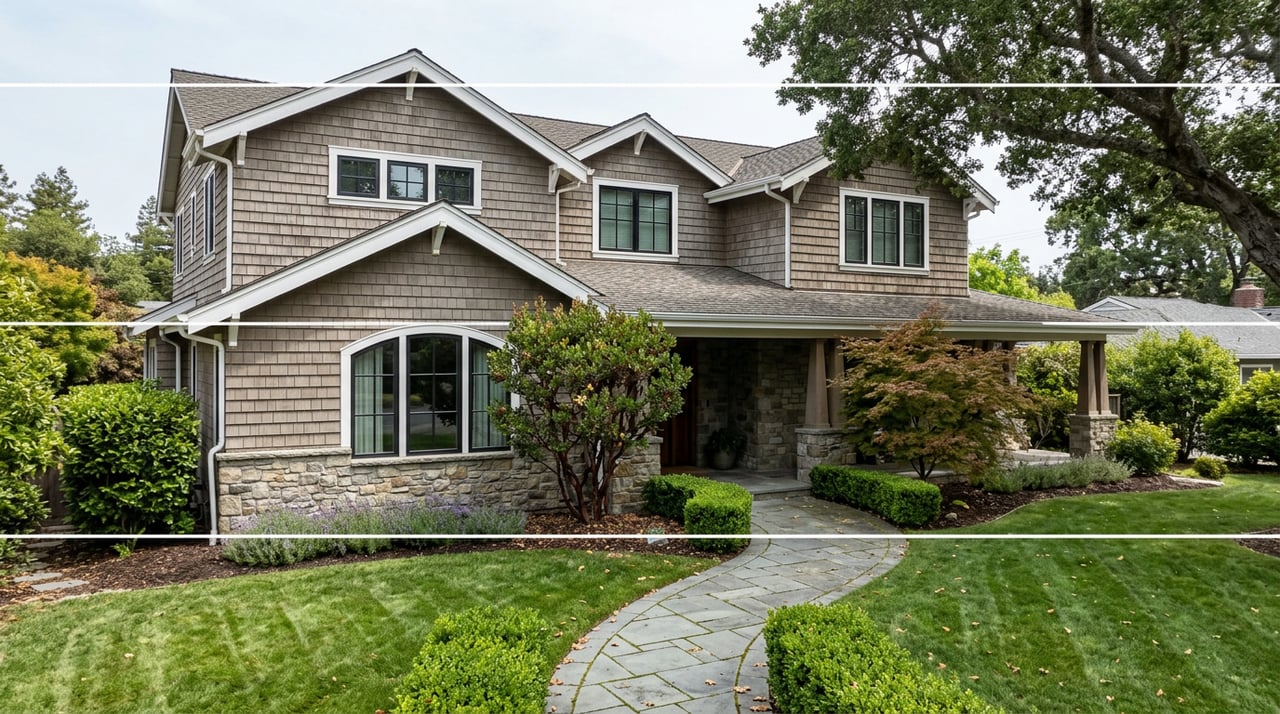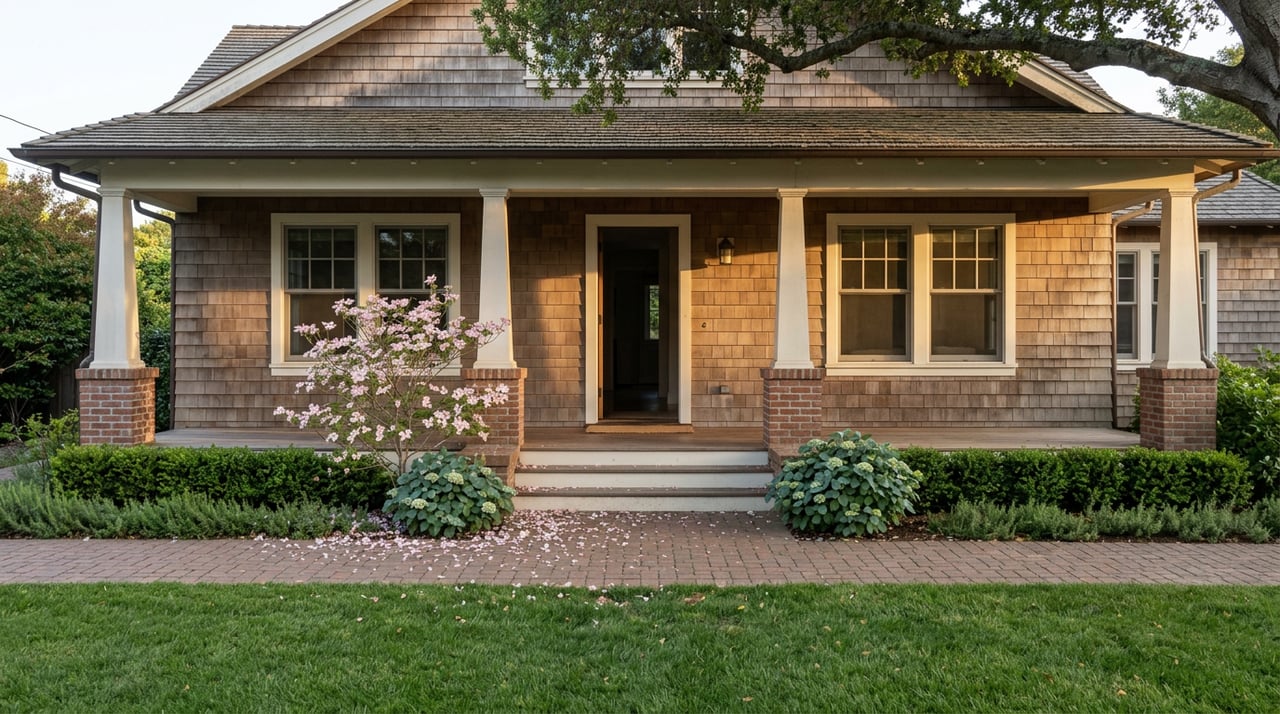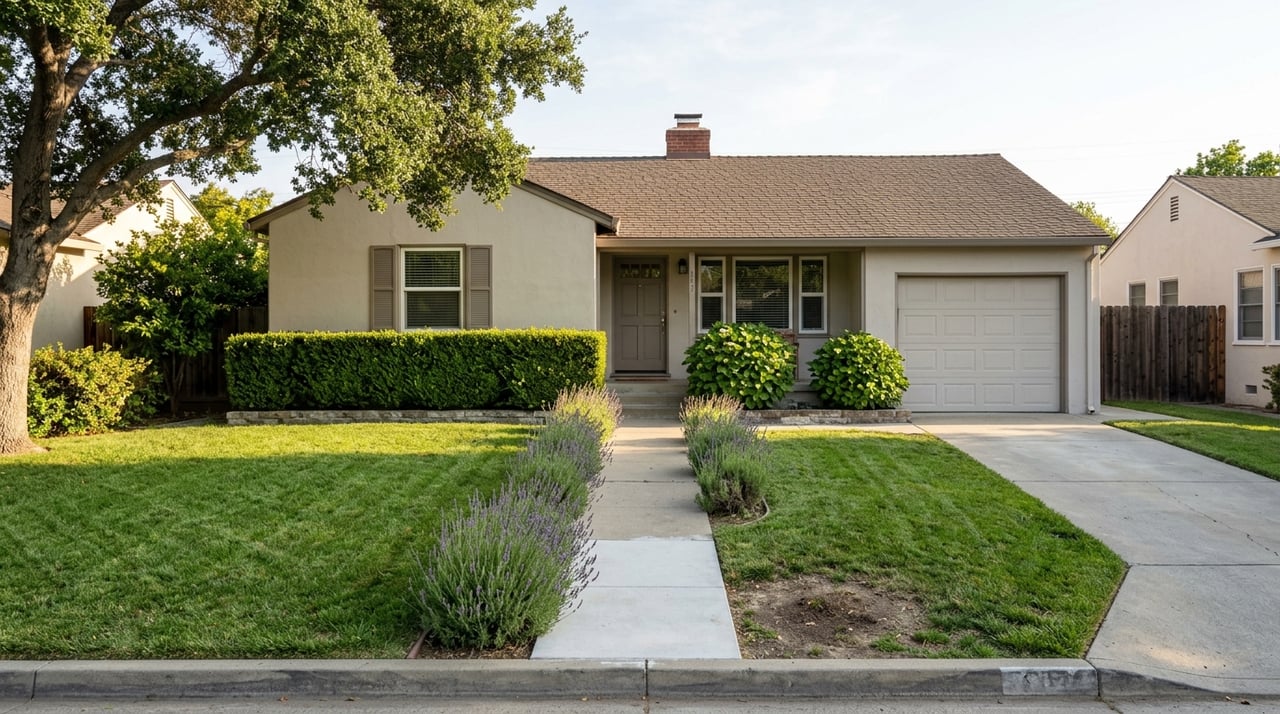
Drive North McDowell Boulevard this month and you'll pass orange cones, a paused bus stop with a hand-lettered sign about schedule delays, and a construction fence around what used to be an open field next to the tennis courts at Lucchesi Park. That field is becoming a skatepark. The City broke ground on it May 21, and the same week, a few blocks away, the Planning Commission sat down to review concepts for what the whole corridor could look like in ten years.
None of that shows up in a home search. A buyer scrolling comps near the SMART station sees square footage, lot size, and a sold price. What they don't see is that the neighborhood around that price is mid-sentence in a much longer conversation about what it's going to become, and the ending hasn't been written.
That's the piece worth understanding before you write an offer on Petaluma's East Side: the price you're looking at right now reflects a corridor that is actively being redesigned, not one that has settled into its final shape. Some of that redesign is already built. Most of it is still a set of ideas on a whiteboard in a City Hall conference room, waiting on a draft document that won't be public until fall.
What the Petaluma North SMART Station Specific Plan Actually Covers
The City calls it the Petaluma North SMART Station Priority Development Area Specific Plan, or PNSP for short, and it covers a real, mappable stretch of the East Side: the area around the Petaluma North SMART Station and the length of the North McDowell Boulevard corridor. At a community open house in December 2025, the City described the planning area as roughly 1,100 acres, framed explicitly as the next chapter for Petaluma's East Side.
The plan isn't zoning yet. It's the process that produces the zoning. Two concepts have emerged from the community workshops so far: a Transit Village clustered near the SMART platform itself, and a Health District near Lucchesi Park. Alongside those, planners and residents have been working through what a rebuilt North McDowell Boulevard could look like with better bike lanes, safer crossings, and more places to actually stop and gather, not just drive through.
The timeline matters here more than the concepts do, because it tells you exactly how far along this is. The City held a community workshop at the Lucchesi Community Center on March 21, 2026. The Community Outreach Partners working group met for a third time on May 5 and a fourth time on July 13. City staff and the project consultant are now spending the summer and early fall drafting the actual Specific Plan and its accompanying Environmental Impact Report for public review. As of this writing, that draft isn't out yet.
If you're evaluating a home inside or near that 1,100-acre boundary today, you're pricing a corridor whose rulebook is still being written.
The Corridor Is Already Moving, Even Without a Finished Plan
Here's the part that catches people off guard: you don't have to wait for the Specific Plan to be adopted to see money and concrete already committed to this corridor.
The Meridian at Petaluma North Station is a 131-unit affordable housing project already under construction on North McDowell Boulevard, on a 6.5-acre parcel just north of the SMART station area. The project sets aside 33 units as supportive housing with on-site services, targets renters earning between 30 and 80 percent of area median income, and includes something easy to miss: the developer is dedicating a portion of the parcel to SMART itself, to support future build-out of the Petaluma North Station, and reserving the corner at North McDowell and Corona Road for a future commercial project. According to public filings, construction was expected to take about 13 months and finish in 2026.
At the same time, the North McDowell Boulevard Improvement Project, running from Sunrise Parkway to Old Redwood Highway, is actively under construction, which is why you're seeing bus delays and shifted stops along that stretch right now. The City held a virtual community meeting on the project in May 2026, and work is ongoing.
So the corridor already has a transit-adjacent affordable housing development going up, a rebuilt boulevard in progress, and a new skatepark breaking ground, all before the governing Specific Plan has cleared public review. The physical transformation and the planning process are running on parallel tracks, and they haven't caught up to each other yet.
Why Petaluma's Median Price Doesn't Tell You What's Happening Here
This is where the market data gets genuinely useful, not as a headline number but as a contrast.
Citywide, Petaluma's median sale price sat at $900,000 over the three months ending June 2026, down 2.2 percent from the same period a year earlier, with homes selling in around 28 days. That's a flat-to-cooling picture if you stop there.
But West Petaluma, tracked as its own submarket, told a completely different story over that same trailing three-month window: a median sale price of $1.23 million, up 37.6 percent year over year, with price per square foot up nearly 26 percent. One neighborhood inside the same city moved sharply while the citywide blended number looked calm.
That gap is the point. Petaluma's median hides distinct submarkets moving on entirely different timelines, and the trigger for a submarket repricing event isn't always obvious until after it's happened. West Petaluma has already had its moment. The East Side, still waiting on its Specific Plan, hasn't yet had one that's visible in the data the way West Petaluma's is. That doesn't mean it won't. It means the market hasn't fully decided what the North McDowell corridor is worth once the Transit Village and Health District concepts move from workshop drawings to adopted zoning.
Buyers evaluating a home near the station right now are, in effect, deciding whether they believe that repricing is coming before it shows up in the comps, or whether they'd rather wait for certainty and pay whatever premium certainty commands once the draft plan and EIR are public this fall.
What This Means If You're Looking on the East Side Right Now
A few practical things worth knowing before you tour anything near North McDowell:
- The Specific Plan area is roughly bounded by the SMART station and the McDowell corridor. If a listing sits inside or adjacent to that boundary, ask directly whether the seller's agent knows the property's relationship to the PNSP planning area.
- Construction disruption on North McDowell Boulevard is current, not historical. Factor in bus rerouting and active roadwork if you're touring homes along that stretch this year.
- The Meridian project is a useful reference point for what "transit-oriented" actually means on the ground here: multifamily buildings, three to four stories, built specifically because of proximity to the SMART platform. If that's not the density or character you want next door, that's worth weighing now, not after the Draft Specific Plan comes out.
- The City's own General Plan Update process has openly described a long-standing physical divide between the East and West sides of Petaluma as part of the pattern this planning work is meant to address. That framing came directly from the City's public planning materials, not from a broker's marketing copy, which tells you the intent here is structural, not cosmetic.
None of this means the East Side is a gamble. It means the East Side is a place where the rules are being actively rewritten, and a buyer who understands the timeline has a clearer read on the property than one who only looks at what already sold.
Frequently Asked Questions
What's the difference between the General Plan Update and the Petaluma North SMART Station Specific Plan? The General Plan Update is Petaluma's citywide, twenty-year roadmap, currently headed toward adoption after Planning Commission and City Council review earlier in 2026. The PNSP is a much more focused document that translates that citywide vision into specific land use, transportation, and housing decisions for the roughly 1,100-acre area around the North SMART Station and McDowell corridor.
When will the Draft Specific Plan be available to the public? As of this writing, City staff and the project consultant are preparing the Draft Specific Plan and Draft Environmental Impact Report over the summer and into early fall 2026, following the fourth Community Outreach Partners working group meeting on July 13. No exact release date has been published yet.
Does this affect existing single-family homes, or only new development sites? The plan focuses on how future development, transportation, and public space are shaped within the planning area. Existing homes aren't being rezoned by the workshops themselves, but any adopted Specific Plan will set the framework future projects in that footprint have to follow, which can affect what gets built near an existing home over time.
Is the North McDowell Boulevard construction related to the Specific Plan? It's a related but separate project. The North McDowell Boulevard Improvement Project, running from Sunrise Parkway to Old Redwood Highway, is a physical roadway upgrade already under construction. The Specific Plan process considers the long-term vision for that same corridor, including additional multi-modal improvements beyond what's being built right now.
If you're weighing a home near the North SMART Station corridor and want to talk through what the timeline actually means for your offer, or your five-year plan, Amy Ahlers knows this stretch of Petaluma block by block. Reach out and let's figure out how to own the home meant for you.